Susan Kare builds the Macintosh’s visual language
Kare joins Apple and turns a 32 × 32 grid into a vocabulary: the Happy Mac, Command symbol, Chicago, Geneva and more.
 LFG
LFGA very small icon with a very long history
The unofficial lore archive for Lil Finder Guy, the smiling face that escaped the Dock, found a body, and is now looking for its next folder on Solana.
Before computers had personalities, one little smile made the machine feel human.
LFG is not a random mascot pasted onto a ticker. The character sits at the end of a forty-year design lineage: from Susan Kare’s black-and-white Happy Mac, through the blue split-face Finder, to the tiny three-dimensional character the internet adopted in 2026. The meme is the history. The ticker is simply its shortest form.
THE ANCESTOR
In early 1983, Macintosh programmer Andy Hertzfeld built an icon editor using Bill Atkinson’s “Fat Bits” technique. Susan Kare used it to craft the tiny bitmap images that would give the original Mac its voice. Among them was the Happy Mac: a smiling computer shown during startup.
That smile mattered. Early personal computers were unfamiliar and intimidating. Kare’s icons translated abstract commands into objects and gestures people already understood. The Mac did not merely boot; it greeted you.
THE FACE
When Aqua arrived with Mac OS X, Finder received the blue-and-white face that still lives at the left edge of the Dock. One continuous line divides the icon into two profiles. Look once and you see a smiling face; look again and you see two faces meeting.
The popular reading is irresistible: human on one side, machine on the other, joined by the interface. It perfectly fits the Macintosh philosophy, but the precise “user and computer” explanation is widely repeated without a definitive Apple primary source. Good lore keeps the poetry and labels the proof.
No. The icon is often called Picasso-like or Cubist, and other modernist comparisons have been proposed. Those are interpretations, not documented authorship. The exact Mac OS X Finder designer is less clearly sourced than Kare’s Happy Mac.
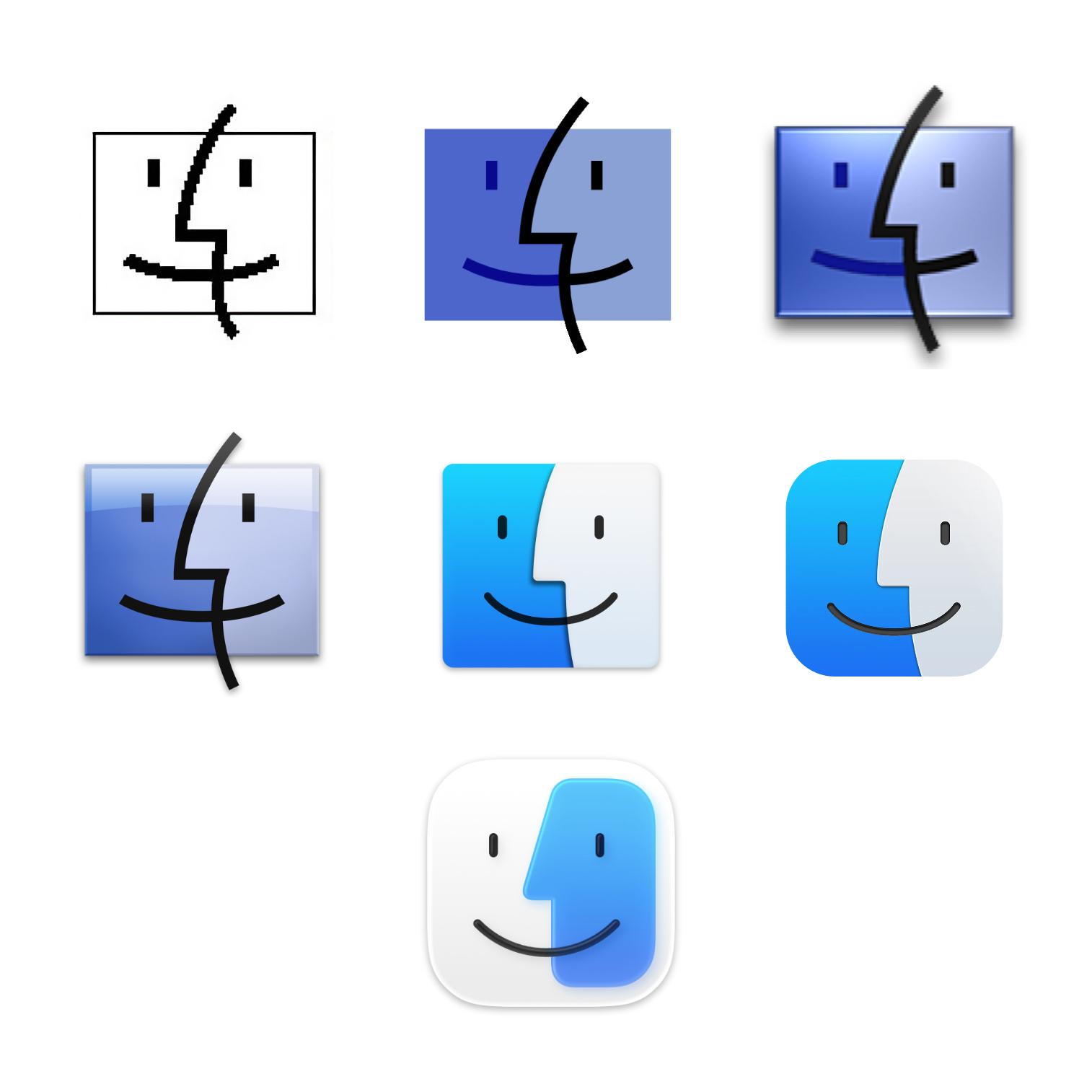
Kare joins Apple and turns a 32 × 32 grid into a vocabulary: the Happy Mac, Command symbol, Chicago, Geneva and more.
The original Mac ships. Its startup smile makes the machine feel less like equipment and more like a collaborator.
Mac OS X brings Aqua. The blue-and-white, split-profile Finder icon becomes the Dock’s permanent first resident.
Yosemite removes much of Aqua’s gloss, but keeps the split, the smile and the asymmetry. The silhouette outlives the style.
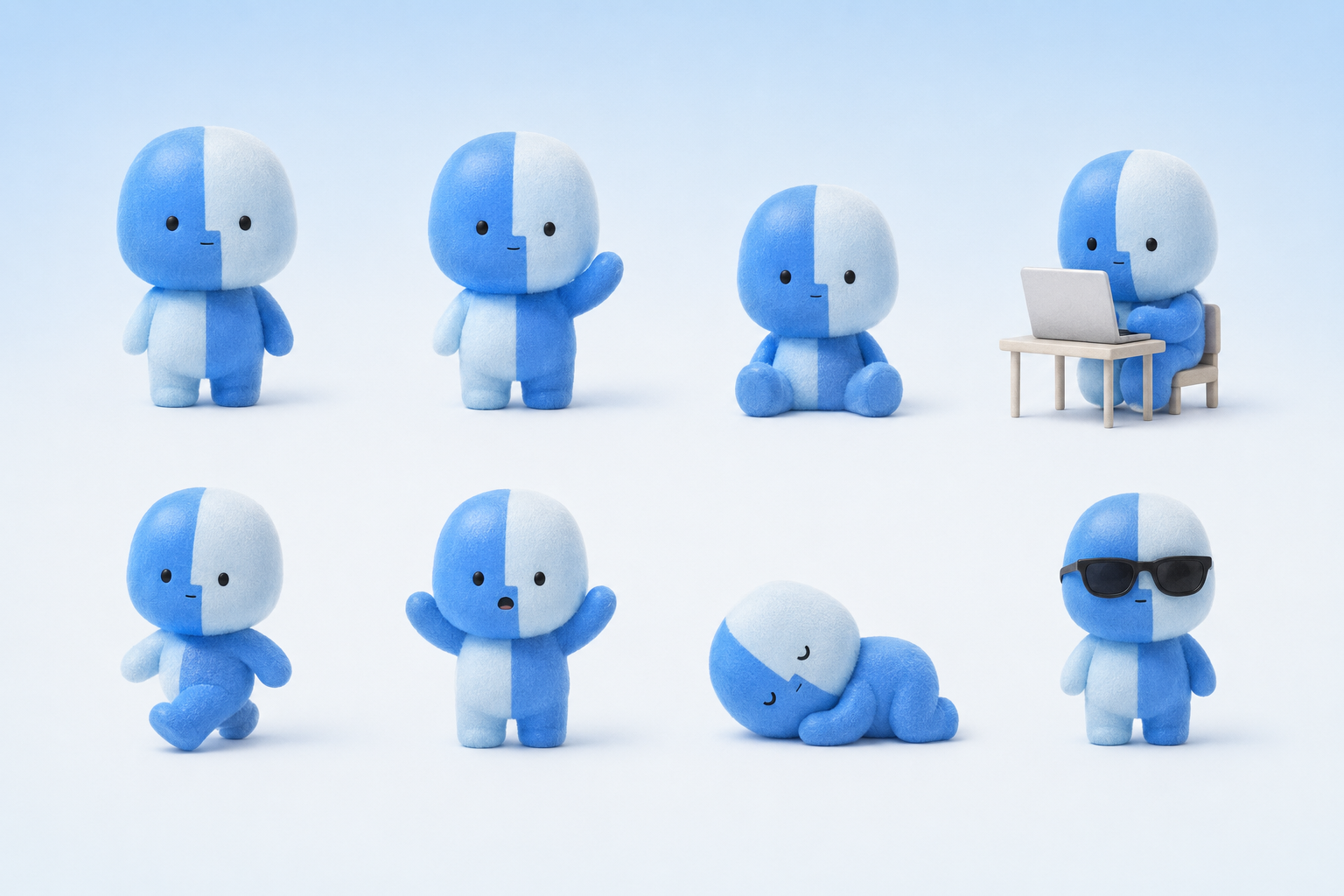
A tiny physical mascot appears in Apple’s MacBook Neo social campaign. The internet names him Lil’ Finder Guy.
The community brings the little guy to Solana through pump.fun, with a planned market beside AAPLx from xStocks.
THE INTERNET NAMES HIM
In March 2026, a tiny Finder-faced character appeared around Apple’s MacBook Neo campaign on TikTok, first glimpsed in campaign material and a livestream, then repeatedly adopted by fans. “Lil’ Finder Guy” was a community nickname, not an announced product name.
Months later, Apple art director Sofia Coelho publicly described leading the character’s visual design and concept. Her tongue-in-cheek birth announcement measured him at “exactly one apple tall.” Sketches and a physical prototype confirmed the mascot was a deliberate campaign character.
THE NEXT FOLDER
One side is internet culture. The other is tokenized market exposure. $LFG launches on pump.fun. The planned LFG/AAPLx market on Solana puts the mascot inspired by Apple’s computing history beside Apple xStock, a tokenized asset issued by Backed.
Community meme asset
Apple xStock by Backed
The cultural link is immediate: Finder belongs to Mac history; AAPLx provides tokenized exposure linked to Apple stock.
LFG is a meme coin. AAPLx is a tokenized asset issued by Backed and is economically linked to Apple stock. Pairing them does not make LFG equity or Apple-backed.
Both assets live on Solana, allowing an LFG/AAPLx market to exist onchain. $LFG launches through pump.fun; the pair is a separate liquidity market.
THE RECEIPTS
Every good meme mutates. This archive keeps the documented record separate from the stories we tell around it.
LFG is an independent, unofficial meme project and is not affiliated with, endorsed by, or sponsored by Apple Inc., xStocks, Backed, Solana or pump.fun. Apple, Mac, Finder and related marks belong to their respective owners. AAPLx provides tokenized economic exposure linked to Apple stock; it is not direct ownership of Apple shares and may be restricted in multiple jurisdictions. This website is lore and concept documentation, not an offer, promise of return or financial advice.